Ahead of Their Time: How Modest Dressers Became the Unlikely Architects of Modern Fashion
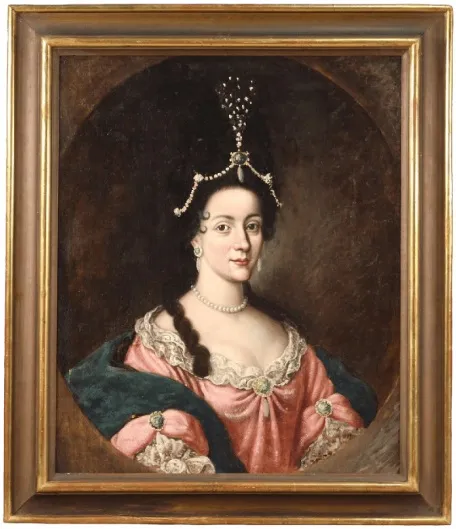
Photo: Unidentified painter, Public domain, via Wikimedia Commons
There is a particular irony embedded in the history of fashion criticism. For the better part of three decades, women who chose coverage over exposure were quietly advised — by magazine editors, by stylists, by the culture at large — that their aesthetic sensibility belonged to another era. Modest dressing, the industry implied, was something one graduated from, not something one arrived at. And yet here we stand, in a moment where the most celebrated runway looks are floor-length, where luxury brands are revisiting the turtleneck as a statement of prestige, and where the sustainable fashion movement is championing the very principles — quality over quantity, enduring over ephemeral — that conservative dressers have practiced for generations. The industry did not lead this shift. It followed.
The Runway Catches Up
Consider what has been happening at the upper echelons of fashion over the past several years. Brands like Bottega Veneta, The Row, and Toteme have built extraordinary cultural cachet on a foundation of restraint. Their collections emphasize long hemlines, structured silhouettes, and layered coverage — precisely the vocabulary that modest dressers have spoken fluently for years. These are not fringe labels catering to a niche audience. They are among the most discussed, most imitated, and most aspirational names in contemporary American fashion.
When Phoebe Philo relaunched her independent label to near-universal acclaim, the fashion press celebrated her as a visionary. What they described, however — clothing that respects the body without revealing it, tailoring that communicates authority rather than availability — is a philosophy that women in conservative communities across the United States have lived by without needing a designer's imprimatur. The runway did not invent this language. It borrowed it.
Sustainability and the Modest Wardrobe: A Natural Alliance
The sustainable fashion movement, which has become one of the most significant forces reshaping American retail, is built on a set of values that align almost perfectly with the modest wardrobe philosophy. Buy less. Choose well. Invest in pieces designed to last. Resist the pressure of seasonal trends. Prioritize natural fibers and ethical production.
For the thoughtful conservative dresser, these are not revolutionary directives — they are simply good sense. The woman who has long selected a beautifully constructed wool crepe skirt over a disposable fast-fashion alternative was practicing sustainability before the term entered the mainstream lexicon. She was already asking the questions that the industry is only now beginning to consider: Does this garment honor the person wearing it? Will it endure? Does it reflect something of genuine value?
This alignment is not coincidental. Both modest fashion and sustainable fashion are, at their core, expressions of intentionality — a deliberate rejection of the disposable in favor of the considered. When American consumers began demanding more from their wardrobes, they were, in many respects, catching up to a standard that modest dressers had quietly maintained all along.
The Cultural Recalibration
Beyond the runway and the sustainability conversation, something larger is shifting in American culture. There is a growing weariness with the relentless visibility that social media has both enabled and demanded — a fatigue with the performance of exposure. Increasingly, women across generational lines are expressing a desire for clothing that does not ask them to justify themselves, that does not require constant negotiation between comfort and appearance, that allows them to walk into a room and be taken seriously on their own terms.
This is, of course, precisely what modest dressing has always offered. The conservative wardrobe is not a wardrobe of restriction — it is a wardrobe of authority. It communicates that the woman wearing it has made a deliberate choice, that she understands the power of restraint, and that she has no interest in seeking approval through exposure. In a cultural moment defined by an increasing appetite for authenticity and self-determination, that message resonates with extraordinary force.
Designers and retailers are responding. Modest swimwear, once the province of specialty brands catering to specific religious communities, is now carried by mainstream American retailers. Long-sleeve options and higher necklines are appearing in collections where they would have been unthinkable a decade ago. The market is acknowledging what the consumer has been signaling: coverage is not a compromise. It is a preference — and a sophisticated one.
What Modest Dressers Have Always Known
The women who have built their wardrobes around modest principles did not require the fashion industry's validation to understand the elegance of their choices. They already knew that a well-cut long coat carries more authority than any amount of exposed skin. They already understood that a beautifully draped fabric speaks more eloquently than a hemline ever could. They had already discovered, through the quiet confidence of daily practice, that dressing with intention — selecting each piece for its quality, its longevity, and its alignment with one's own values — produces a kind of personal style that no trend cycle can replicate or diminish.
What is changing now is not the wisdom of modest dressing. What is changing is the industry's willingness to acknowledge it.
Reclaiming the Narrative
For the conservative woman who has long navigated a fashion landscape that seemed designed for someone else entirely, this moment carries a particular satisfaction. The principles she has held — the commitment to coverage, the preference for quality, the belief that elegance does not require exposure — are now being described by fashion editors as visionary, by sustainability advocates as responsible, and by cultural commentators as a meaningful counter to the excesses of the recent past.
She is, in the most literal sense, ahead of her time. Not because she predicted a trend, but because she was never following one to begin with.
At Modestly Yours, we have always understood that the most enduring style is the kind that does not require the industry's permission. The woman who dresses with conviction, who chooses her clothing as a reflection of her values rather than a response to the season's directives, is not behind the curve. She is, and has always been, defining it.
The fashion world is simply beginning to notice.