Steadfast in Style: How to Dress with Confidence When Your Life Is Rewriting Itself

Photo: Vittorio Matteo Corcos, Public domain, via Wikimedia Commons
Change is, by its very nature, disorienting. Whether you are stepping into a new professional role, settling into an unfamiliar city, emerging from the end of a significant relationship, or simply arriving at a season of personal transformation, the ground beneath your feet feels different. What you wear during these moments is not a trivial concern—it is, in fact, one of the most immediate and accessible tools you possess for reclaiming a sense of self.
For the woman committed to modest, elegant dressing, transitions present a particular kind of tension. The temptation to abandon what you know in favor of something entirely new can feel compelling when everything else is shifting. Yet the opposite instinct—clinging rigidly to a wardrobe that no longer reflects your current reality—can leave you feeling costumed rather than clothed. The truth, as it so often is, lies in thoughtful discernment.
The Architecture of a Wardrobe That Weathers Change
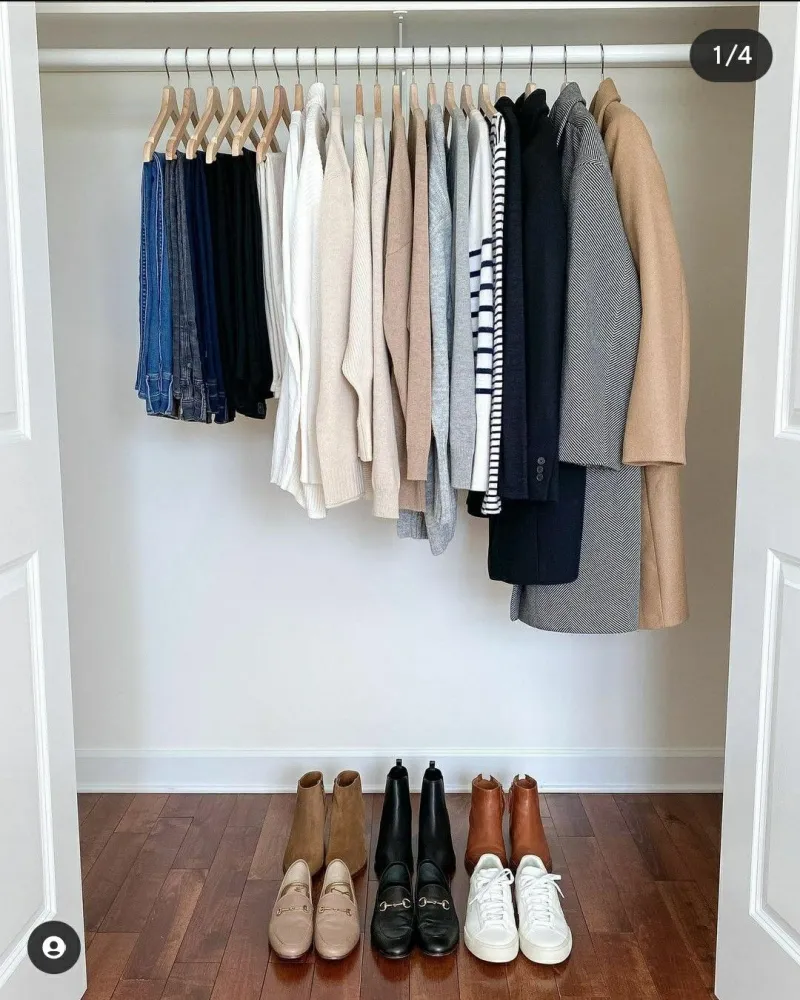
Before any transition requires a single new purchase, it is worth conducting an honest inventory of what you already own. The modest wardrobe, when built with care, contains within it a remarkable resilience. Certain pieces transcend context entirely: a well-tailored blazer in a neutral tone, a fluid midi skirt in a classic fabric, a crisp long-sleeved blouse in ivory or soft white. These are not merely garments—they are structural elements that hold their relevance regardless of what chapter you are entering.
Consider the woman relocating from the American South to the Pacific Northwest. Her climate shifts, her social landscape transforms, and her professional environment may look entirely different. And yet her commitment to coverage, to refined silhouettes, and to fabrics that move with dignity does not waver. What changes is the layering strategy, the color palette drawn from cooler, more muted tones, and perhaps the weight of the textiles she reaches for. Her values remain intact; only the expression evolves.
Releasing What No Longer Serves You—With Gratitude
There is a particular kind of courage required to let go of garments that once felt essential but have since become artifacts of a life you are leaving behind. A wardrobe built around a corporate environment may feel misaligned when you pivot to freelance work or entrepreneurship. Pieces chosen during a marriage may carry emotional weight that makes them difficult to wear during its dissolution.
Approach this editing process with both practicality and gentleness. Ask yourself not merely whether a piece still fits, but whether it still fits you—the woman you are becoming, not only the woman you have been. This is not an act of erasure. It is an act of curating your next chapter with the same intentionality you brought to the previous one. Donate or consign what you release, and allow those pieces to serve another woman in her own season of life.
Introducing New Silhouettes Without Losing Your Foundation
A transition is an invitation to refine your aesthetic, not to abandon it. When introducing new pieces to a wardrobe in flux, proceed with deliberate restraint. Select one or two silhouettes that feel relevant to your new context and test them against your existing wardrobe before committing to a full refresh.
Perhaps your new professional environment is more creative and less formally structured than your previous one. This does not necessitate shorter hemlines or lower necklines—it may simply call for softer fabrics, more relaxed tailoring, or richer, more expressive color. A flowing wide-leg trouser in a deep jewel tone reads as both creative and composed. A softly draped wrap blouse in a botanical print communicates warmth and approachability while maintaining the coverage you value.
Color, in particular, is one of the most powerful and low-risk tools for signaling personal evolution. If your wardrobe has long been anchored in neutrals, introducing a considered accent color—a warm terracotta, a dusty mauve, a confident navy—can mark a new chapter without requiring a wholesale overhaul. Wear that color in a scarf first, then in a blouse, then perhaps in a skirt, and allow it to settle into your rotation naturally.
The Psychological Power of Dressing with Intention During Uncertainty
Research in the field of enclothed cognition—the study of how clothing influences psychological states—consistently affirms what many women intuitively understand: what we wear shapes how we feel, how we carry ourselves, and how we engage with the world around us. During periods of upheaval, this relationship becomes even more significant.
When external circumstances are beyond your control, the act of dressing thoughtfully becomes a daily declaration of agency. You may not be able to determine how a job interview unfolds, how quickly a new city begins to feel like home, or how smoothly a personal transition resolves itself. But you can choose, each morning, to present yourself to the world as the woman you intend to be—composed, purposeful, and undiminished by circumstance.
This is not performance. It is preparation. The woman who dresses with care during a difficult season is not pretending that everything is fine; she is reminding herself, and the world, that she remains herself regardless of what surrounds her.
Building a Transition Capsule: A Practical Framework
For women navigating a significant life change, a targeted transition capsule can provide both financial discipline and stylistic clarity. Rather than attempting to rebuild an entire wardrobe at once, identify the five to seven pieces that will carry the most weight in your new context.
For a career pivot, this might include two versatile blouses that bridge formal and creative environments, one pair of polished trousers, a midi dress that reads as professional without feeling corporate, and a refined casual layer such as a longline cardigan or structured duster coat. For a relocation to a colder climate, the priority shifts toward a quality wool coat, thermal underlayers that maintain coverage without bulk, and boots that balance elegance with practicality.
In every case, favor quality over quantity. A single well-made piece that integrates seamlessly with what you already own will serve you far better than several lesser items purchased in haste.
When the Mirror Reflects Someone New
Perhaps the most profound transition a woman can navigate is not circumstantial but internal—the gradual or sudden recognition that she has grown into someone different, and that her wardrobe has not kept pace. This form of transition is quieter than a career change or a move, but it is no less significant.
Trust that instinct. The modest wardrobe, at its best, is not a static collection of garments but a living expression of the woman wearing it. It is permitted to evolve as you evolve—to become softer or more structured, more colorful or more restrained, depending on who you are and who you are becoming. What remains constant is the underlying commitment to dressing with dignity, intention, and the quiet confidence that comes from knowing exactly who you are.
Life will continue to change. Your wardrobe, built on a foundation of modest, timeless principles, is more than equipped to change with it.