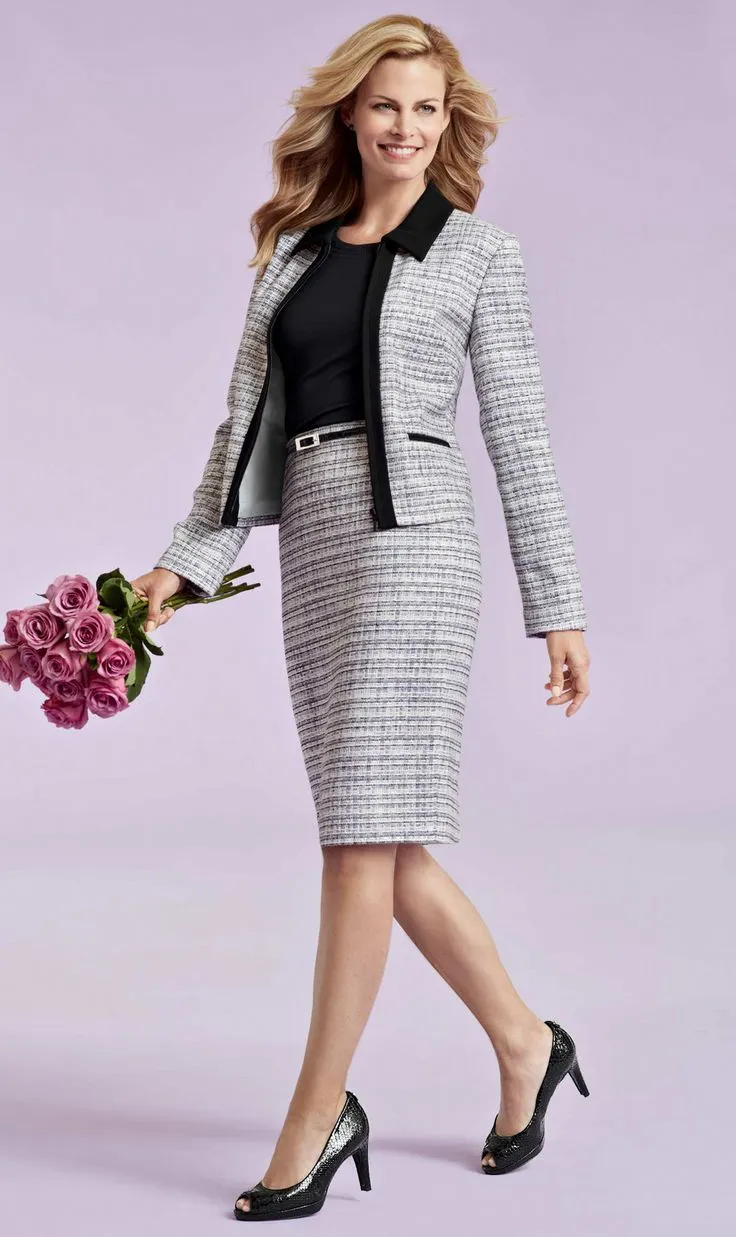
Dressed to Be Heard: The Quiet Influence of Modest Dressing on How Others Receive You

There is a moment familiar to many women who have spent time in professional environments: the moment when something shifts. When the room listens differently. When questions are asked with more weight, when responses are received with more attention, when the conversation moves from pleasantries to substance with unusual speed. For a significant number of women across American professional life, that shift coincided—not accidentally—with a change in how they dressed.
The relationship between clothing and credibility is not new territory. Scholars, organizational psychologists, and communication researchers have long documented the ways in which appearance shapes perception. But a more specific and underexplored dimension of this research concerns what happens when women choose deliberate coverage—when conservative, modest dressing becomes the consistent sartorial standard. The findings, and the firsthand accounts that illuminate them, are worth examining carefully.
What the Research Suggests
The science of clothing cognition—the study of how garments influence both the wearer's psychology and the perceptions of those around them—has produced a substantial body of evidence over the past two decades. Studies from institutions including Northwestern University, Yale, and Princeton have documented that clothing choices trigger rapid, largely unconscious social judgments that shape everything from perceived competence to trustworthiness.
A particularly relevant strand of this research examines how the degree of physical exposure in women's clothing influences the way observers process information about them. Studies published in the European Journal of Social Psychology and replicated in subsequent research have found that when women are perceived as dressing in more revealing ways, observers are more likely to engage in what researchers call "objectification"—a cognitive process that reduces the perceived person to their physical attributes and diminishes attribution of mental capacity and professional competence.
The inverse effect is equally documented. Women dressed in covered, professional attire are consistently rated higher on measures of competence, authority, and intellectual engagement by observers across gender lines. Critically, they are also more likely to be remembered for what they said rather than how they appeared.
This is not a moral judgment. It is a description of the cognitive environment in which professional women currently operate—and understanding it is the first step toward navigating it with intention.
Voices from the Boardroom and the Lectern
The data becomes vivid when set against the experience of real women who have made the transition to consistently modest professional dressing.
Caroline, a 47-year-old executive vice president at a financial services firm in Chicago, describes a deliberate experiment she conducted early in her career. "I spent about six months alternating between what I'd call 'fashion-forward' professional dressing and more conservative, covered clothing. Same meetings, same content, same delivery. The difference in how my ideas were received was not subtle. In the covered clothing, people wrote things down. They asked follow-up questions. The conversation went deeper."
She is careful to note that the shift was not simply about formality. "It wasn't about wearing more expensive clothes. It was specifically about coverage. A well-cut dress with a high neckline and a longer hemline produced a different quality of attention than the same level of investment in something more revealing. I stopped being the visual element in the room and became the intellectual one."
Dr. Margaret Osei, an associate professor of communications at a mid-Atlantic university, has observed a parallel dynamic in academic settings. "Students, particularly in large lecture formats, engage differently depending on what I wear. When I dress in modest, structured clothing—high necklines, full coverage, quality fabrics—the questions I receive after class are more substantive. Students are more likely to challenge my ideas intellectually, which is exactly what I want. It's as though the clothing signals that the exchange is meant to be about ideas."
The Social Setting: Modest Dressing Beyond the Office
The influence of modest dressing on interpersonal communication extends beyond the professional environment. Women who dress conservatively in social contexts—dinner parties, community gatherings, civic meetings—report similar patterns of engagement.
Linda, 62, a longtime volunteer leader with a regional nonprofit in Atlanta, observes that her covered, elegant style has consistently shaped how new acquaintances approach her. "People ask me questions about my opinions and my work almost immediately. I don't experience the small-talk phase that other women describe. There's something about the way I present myself that seems to signal that I'm there to contribute, not to be looked at. And people respond to that."
This is consistent with what sociologists describe as "appearance-based status signaling"—the way clothing communicates social role and relational expectations before a word is spoken. Conservative, elegant dress signals engagement, seriousness, and a certain settled confidence that invites substantive interaction.
Dressing with Strategic Intention
For women who wish to leverage these dynamics deliberately, a few principles are worth internalizing.
Clarity of silhouette communicates clarity of purpose. A well-structured outfit—one with defined lines, appropriate coverage, and intentional layering—signals that its wearer has considered her presentation. That intentionality is itself a form of communication.
Quality of fabric speaks before you do. The tactile and visual weight of quality materials—wool, silk, structured cotton—registers differently than synthetic fabrics. Investing in fewer, better pieces pays dividends in the perception of seriousness and substance.
Consistency builds authority over time. Women who dress modestly and well with regularity develop what might be called a style reputation—a reliable visual identity that, in professional contexts, becomes associated with their intellectual and professional contributions. The woman who always presents herself with covered elegance is not remembered for what she wore. She is remembered for what she said.
The Deeper Principle
At its most fundamental, the connection between modest dressing and the quality of attention one receives reflects something important about human communication: that we are always speaking before we speak. The woman who chooses coverage is, in every professional and social environment she enters, making a statement about what she brings to the room.
She is not there to be observed. She is there to be engaged with.
And in room after room, across boardrooms and lecture halls and community meeting spaces throughout American professional life, that distinction is being heard—clearly, and with increasing respect.