The Freedom Hidden Beneath the Fabric: Why Covering More Sets You Free

There is a particular kind of clarity that arrives the morning you stop negotiating with your wardrobe. No more tugging at hemlines before a meeting. No more adjusting a neckline mid-conversation. No more wondering, as you cross a parking lot or step onto a stage, what impression your clothing is making before you have uttered a single word. For a growing number of American women, that clarity arrived not through minimalism or capsule wardrobing alone—but through the deliberate, considered act of covering more.
This is the modest wardrobe paradox: that wearing more fabric can feel, unmistakably, like wearing less weight.
The Counterintuitive Psychology of Coverage
Western fashion culture has long operated on a particular equation: less fabric equals more freedom. Bare arms signal confidence. Exposed legs communicate ease. The cultural shorthand is so deeply embedded that challenging it can feel almost radical. Yet psychologists who study clothing and self-perception have begun to document what modest dressers have known for years—that the relationship between coverage and freedom is far more nuanced than the prevailing narrative suggests.
Decision fatigue is one of the least glamorous but most powerful forces shaping a woman's daily experience. Research from Columbia University and other institutions has consistently demonstrated that the number of choices a person makes in a given day erodes their cognitive resources. Wardrobe decisions, particularly for women navigating professional environments, can be a surprisingly significant drain. When coverage is a settled matter—when the question of how much is already answered by a personal philosophy—the mental energy spent on dressing recalibrates entirely.
Rachel, a 41-year-old attorney in Nashville, describes it this way: "I spent years trying to find the right balance between professional and approachable, and a huge part of that was managing how much of my body was visible. Once I committed to covered silhouettes, I stopped having that calculation running in the background. I just got dressed."
That is not a small thing. That is the recovery of mental real estate.
Reclaiming the Terms of Your Own Introduction
Beyond decision fatigue lies something deeper: the question of agency. In a media landscape saturated with images of women whose value is visually communicated through physical exposure, choosing coverage is, quietly, a refusal. It is a woman saying that she will not be introduced by her body before she is introduced by her mind.
This is where modest dressing becomes genuinely rebellious—not in the theatrical, trend-driven sense, but in the enduring sense of self-determination. The modest dresser is not reacting to fashion; she is operating outside its most exhausting imperatives entirely.
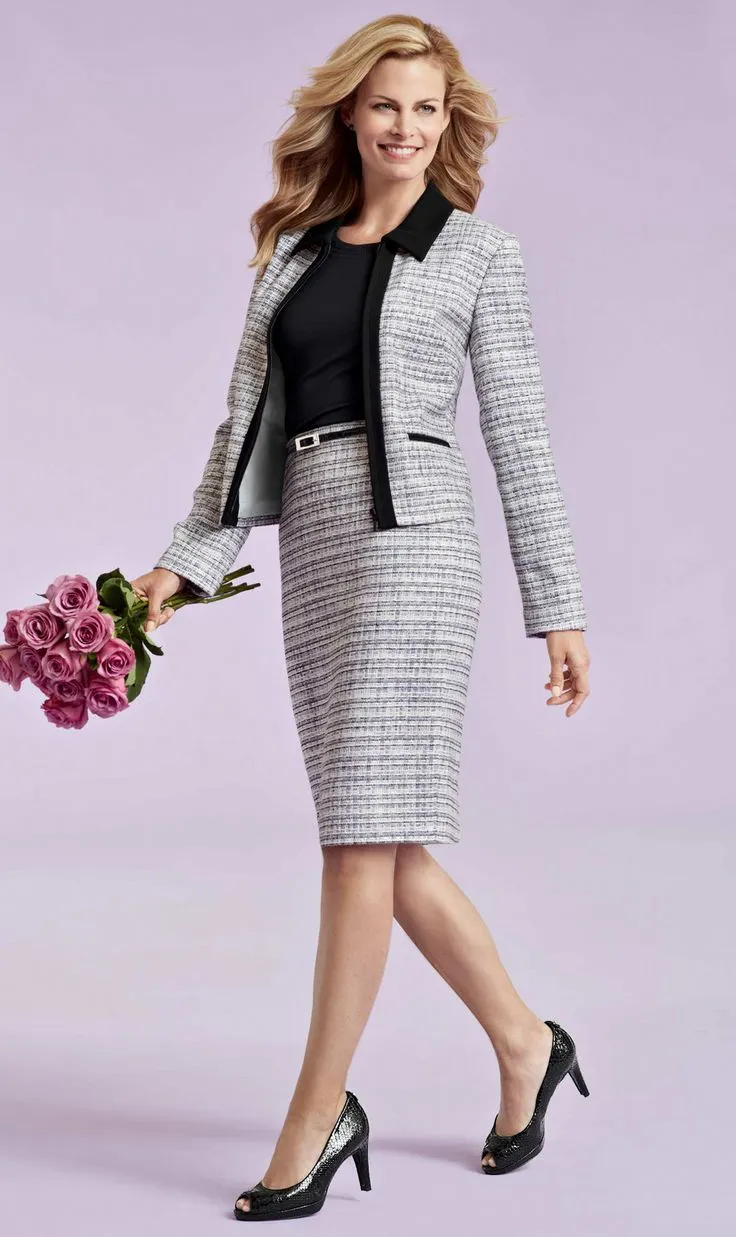
Denise, 58, a retired school principal in suburban Ohio, recalls the shift she experienced in her mid-forties. "I had always dressed to look appropriate, but there was still this undercurrent of wanting to look a certain way for other people. When I started dressing more conservatively—longer skirts, structured blazers, proper coverage—something settled in me. I stopped dressing for an audience and started dressing for myself."
That distinction—dressing for oneself rather than for external appraisal—is central to what makes modest style feel liberating rather than restrictive. The woman who has chosen her standards is not bound by anyone else's. She is, in the most practical sense, free.
The Oversaturation Problem and the Modest Response
Today's fashion landscape is, by any measure, exhausting. Micro-trends cycle through social media at a pace that makes genuine personal style nearly impossible to cultivate. The pressure to remain visually current, to participate in each new aesthetic moment, is relentless. And for women whose style involves deliberate coverage, the mainstream market often offers little useful guidance.
This creates an ironic advantage. Modest dressers are, by necessity, operating on a longer time horizon. They are investing in quality fabrics, classic silhouettes, and thoughtful layering rather than chasing whatever silhouette dominated last Tuesday's trending page. The result is a wardrobe that does not expire—and a style identity that does not require constant renewal.
Amanda, 29, a graduate student in Boston who began dressing modestly two years ago, puts it plainly: "I used to spend so much time and money trying to keep up. Now I have a smaller wardrobe that I actually love, and I don't feel like I'm behind anything. I feel like I opted out of a race I never wanted to run."
Opting out, it turns out, is its own form of liberation.
The Awakening Across Life Stages
What is striking about the women who describe this paradox is how varied their paths to it have been. There is no single awakening. Some arrive at modest dressing through faith traditions that value modesty as a spiritual discipline. Others find their way through practical frustration with fashion's demands. Still others, like Denise and Rachel, arrive through a gradual accumulation of professional and personal experience that eventually crystallizes into a clear preference.
What they share is the moment of recognition—the first morning they dressed with full coverage and felt not diminished but expanded. Not constrained but composed. Not hidden but, for the first time, genuinely present.
This is the paradox made real: that the woman who covers herself is not concealing who she is. She is, with every deliberate layer, asserting it.
Dressing as a Declaration
At Modestly Yours, we have always believed that elegance is not a concession—it is a conviction. And the women who have discovered the freedom within modest dressing are not retreating from the world. They are meeting it on their own terms, composed and unhurried, dressed not to be consumed but to be taken seriously.
The paradox resolves itself the moment you live it. Wear more. Feel freer. It is, perhaps, the most quietly radical thing a woman can do.